

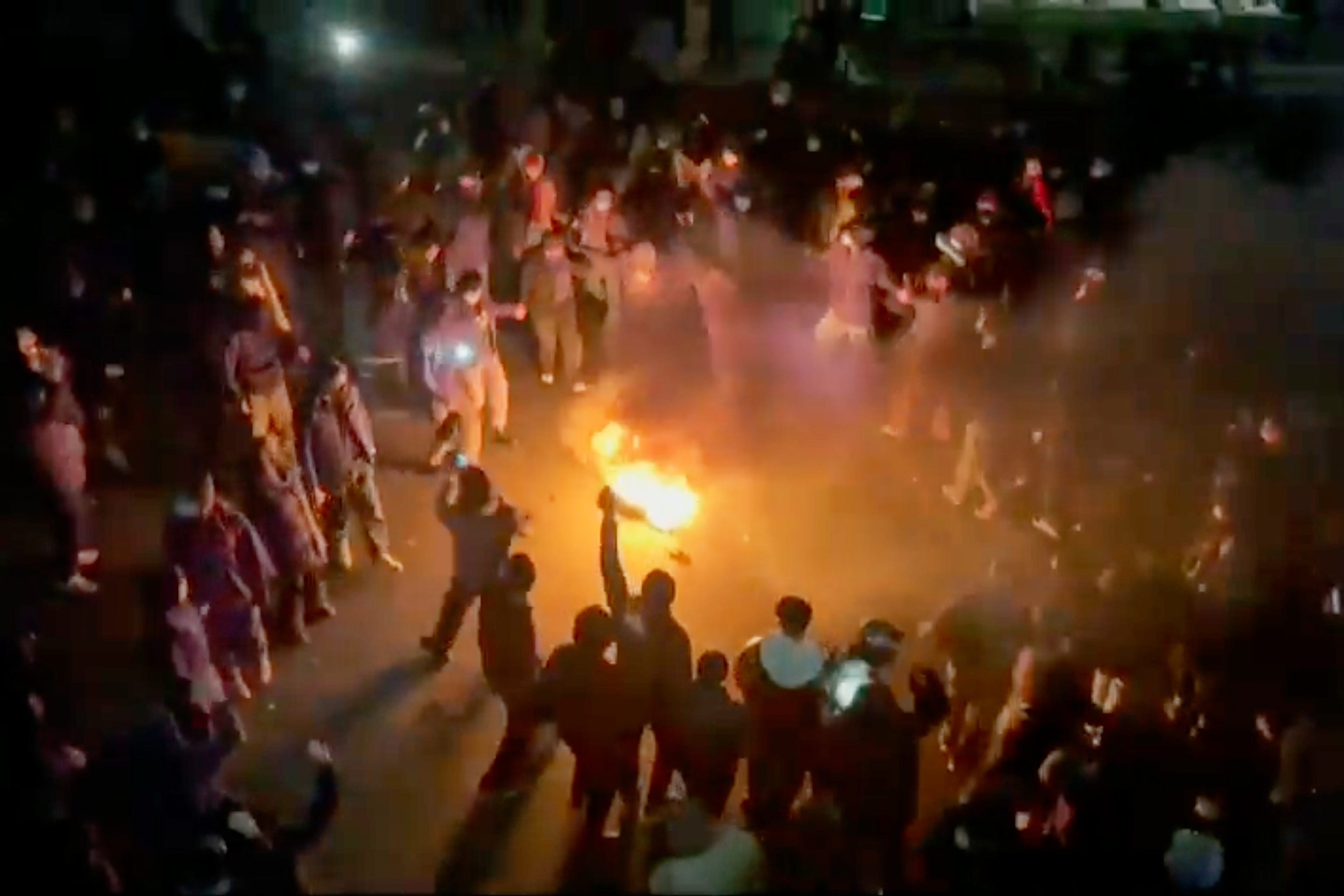
In recent days, as brave Iranians have been slaughtered for standing up to the brutal Islamist regime, people of good conscience have been asking: Where the hell is the media? How is this not the biggest story on Earth?
People disgusted by the media’s failure have rallied outside BBC headquarters in London, demanding coverage. Columnist Nicole Lampert of The Telegraph wrote that it took the BBC more than a week to put the story on its home page. A network veteran tried to blame the fact that correspondents are banned from entering Iran, she noted. “This, of course, prompted much hilarity as the BBC quoted every cough and spit from Hamas when it came to its Gaza reporting.”
It’s not just the BBC. This problem is everywhere. A search of stories at NPR, my old stomping grounds, makes for a depressing experience. This morning I looked up on-air stories with the keywords “Iran” or “Iran protesters” over the past week, and found a total of one headline, and one partial headline. Everything else was a brief mention of Iran in other contexts.
Actual human rights activists, as opposed to performative college crazies and Greta Thunberg-type media darlings, are decrying the global media’s silence. And some Iranian-Americans are saying that when the media gives the demonstrations any attention, it downplays the horror.
I have a unique vantage point. I covered a previous deadly Iranian uprising that also included a media blackout by the Islamic regime. A PBS documentary about it kicks off with my coverage from CNN. Hear it in the episode I put together after escaping Iran’s bombing onslaught last June:
As I explained then, the possibility of a new homegrown uprising was the ultimate wild card for the brutal regime.
Back in 2009, when I covered that deadly crackdown on protesters, CNN had plenty of problems. But we were at least dogged about trying to report details of the horrors in Iran. So, what has changed?
Psychological infestation
Since then, Iran and Qatar learned to use modern tools for their purposes, harnessing state propaganda giant Al Jazeera and social media platforms to flood the world with lies that portray Islamist regimes as victims, never aggressors.
As expert Jason Korman explained in Episode 65, bad actors discovered they could use memetic warfare to reach people through their cell phones:
“You can spread your memes into people's pockets, literally. If one is interested in changing how people think and has lots of resources and lots of time, you can actually transform entire populations at any scale. And that is what we are witnessing now. It is the gradual association of extreme philosophies that become normalized over time.”
Here’s lots of research on how Iran and other Islamist regimes have done this.
They’ve especially targeted people who lean left politically, and are primed to see the world through victim-oppressor-savior narratives. The media plugged into this, and worked to appeal to them. The more stories fed into this narrative, the more clicks these news agencies got.
College graduates entrenched in these same anti-journalistic philosophies went to work for Big Media. It’s been successful infiltration. Now, news agencies regularly spout Iranian propaganda as though it’s factual — both directly, from Iranian state media, and indirectly, through proxies like Hamas and Hezbollah.
That’s only the beginning. More to come in the next newsletters and episodes, so be sure to subscribe. Supporters: Share questions, comments, and links you want fact checked below.