

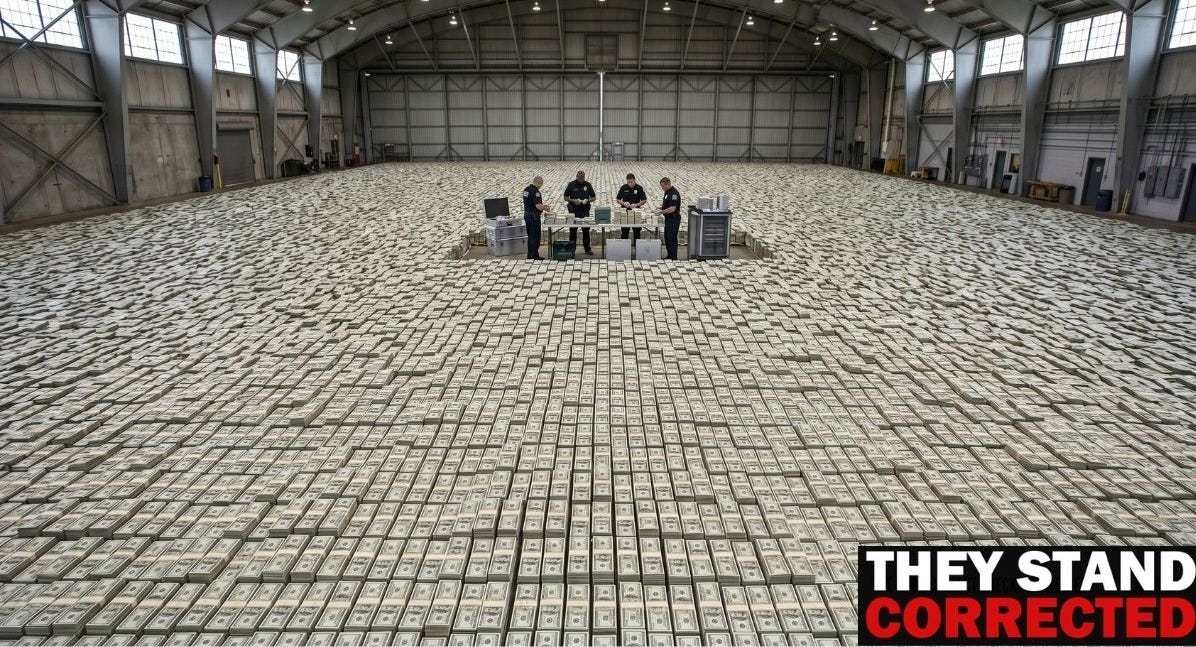
Picture this: A hospital near you refuses to treat many of its patients. Nevertheless, it’s gifted more than $100 million by two very wealthy people — and immediately asks you to donate money. Would you?
That’s the situation NPR is in now. While refusing to provide facts and context on basic stories, it has received a massive cash infusion and wants your money. I explain in this episode:

I used to raise money for public radio. Twice a year at pledge drive, I came up with ways to keep the process fun and upbeat, and was joined by (my then fellow) NPR personalities like Nina Totenberg and the late Susan Stamberg and Cokie Roberts.
Now, I tell people it’s time to stop giving money to NPR until the network shapes up its act. For longtime fans of public radio, the reality can be tough to process. As expert Leslie Zane explained in an episode of They Stand Corrected, a brand becomes established in our subconscious minds. Some people still associate NPR with what it once was.
But that NPR is gone. Like so many other major “mainstream” media, it was overtaken by far-left activists who hide basics, report lies as truth, and radicalize people to support Islamist terrorists. I’ve reported on how NPR:
whitewashes Qatari propaganda
infantilizes Gazans
misuses terms like “occupation” and “international law”
didn’t even think of interviewing anyone at a synagogue that was attacked:
NPR's Unforgettably Awful Admission

It’s a question that the kids putting together any middle school newspaper would be able to answer: In the wake of an attempted terrorist attack on …
In this episode, I also take you through how NPR recently tried to erase Iran’s history of antisemitism, pretending vicious pogroms never existed.
I’m not alone in speaking out. Hear my conversation with fellow former NPR guy Mike Pesca here. And my former colleague Uri Berliner wrote this column for The Free Press.
Cutbacks following a 9-figure cash infusion
This week, NPR announced it’s cutting some reporting and editing jobs. In the era of headlines-as-news, the network is giving people the impression that these cuts stem from losing federal funding. In reality, they come immediately after the network received a massive $113 million from just two extremely wealthy people.
Per NPR’s story:
“President and CEO Katherine Maher says the network has to fill a gap of $8 million in its $300-million annual budget because of the elimination of federal subsidies for its member stations, which pay NPR to air programs… She said the network expects to earn $15 million less in station fees this year and is anticipating a drop in corporate sponsorship revenue.”
What about that whopping $113 million? Most of it is “dedicated to technological innovation.”
NPR is not hurting for money. It is, however, hurting for listeners. Its broadcast audience has been dropping substantially for years, and podcasts are not making up for the loss.
Make NPR earn your support by ending its supreme failure. Refuse to contribute, and tell the network why. Here’s how.
Supporters: Share thoughts, questions, and links you want fact checked here:
JL
P.S. On Instagram? Let’s meet up there.
We ceased funding NPR years ago. Here’s why. We called in during the annual funding drive. We provided what at that time was a significant for us, and appeared to be significant for the station, amount. I told the station that we did not normally agree with their point of view or politics, but that we thought that it was important to keep diverse voices alive… I then listened for the acknowledgment of the donation, as the station, of course was acknowledging every donor of a certain amount (because that is always fun, to hear your name on the radio as a supporter :-) )… It never came. That was all we needed to know. We’ve never given a dime since.