

Winston Churchill might not be the first person you think of when you hear about crocodiles. If you were a kid in the 80s, you might think of this guy.

Or the late Steve Irwin, or Javier Bardem. But given the news, it’s time to look at the WWII-era British Prime Minister (whom the BBC declares “a great leader”). On They Stand Corrected, I explain why:
Wartime leaders often describe enemy attackers, particularly terrorists, as monsters or other non-humans. Churchill was a big fan of animal references, likes rats and baboons, as the book Churchill’s Bestiary recounts.
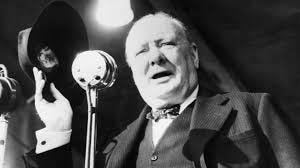
He was especially into crocodile analogies. In this episode, you’ll hear him describe those who tried to appease Nazis: “Each one hopes that if he feeds the crocodile enough, the crocodile will eat him last.”
The New York Times knows there’s nothing unusual about this. But it has separate rules for a leader who fights Islamist terrorists to protect the tiny nation of Israel. In the immediate days after the Oct. 7 mass butchering and rape by Hamas and other Gazans, Israel’s defense minister made lots of remarks. At one point, describing the unimaginable evil, he said, "We are fighting human animals and we are acting accordingly."
Now, in a dangerously misleading op-ed, the Times published a professor using the words “human animals” as alleged evidence of “genocidal” intent. He also took words from Israeli Prime Minister Benjamin Netanyahu and mashed them into a sentence:
“Netanyahu had promised that the enemy would pay a ‘huge price’ for the attack and that the I.D.F. would turn parts of Gaza, where Hamas was operating, ‘into rubble,’ and he called on ‘the residents of Gaza’ to ‘leave now because we will operate forcefully everywhere.’
Truth = Facts + Context
In journalism, the same rules must apply always. That includes accurately contextualizing quotes. So in this episode, I do what the Times refused to do. (I didn’t have to start from scratch, thanks to fantastic work by Salo Aizenberg on X.)
Netanyahu made clear that “huge price” and “into rubble” referred to enemy fighters and their strongholds, not all Gazans — which mainstream media reported at the time. He has also said repeatedly Israel is paying a huge price.
He wanted other Gazans to leave so Israel could fight the terrorists. He did not say “permanently.” Other nations then refused to take in Palestinians, as usual. As I’ve reported, it’s an extremely radicalized population. When large numbers have gone into Jordan and Lebanon, they’ve fought those governments, launched terror attacks and created states within states.
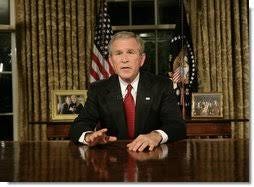
Netanyahu’s remarks in context were very similar to those of President George W. Bush after 9/11:
The Taliban will pay a price. By destroying camps and disrupting communications, we will make it more difficult for the terror network to train new recruits and coordinate their evil plans. Initially, the terrorists may burrow deeper into caves and other entrenched hiding places. Our military action is also designed to clear the way for sustained, comprehensive and relentless operations to drive them out and bring them to justice.
In the op-ed, Brown University Professor Omer Bartov also attempted to read into a biblical reference Netanyahu made to the Amaleks. In reality, Netanyahu made clear there was obviously nothing genocidal in that. This is crucial, because Bartov’s argument is all about intent.
I also explain why the reference makes more sense as an anti-genocidal statement. (Learn more in a great column from Lisa Leil.) There’s artwork of the same quote Netanyahu used at The Hague, the so-called “the international city of peace and justice.”

Ultimately, the Times’ guest essay alleging genocide is just another testament to the rot of “elite” academia — something I discussed here.
More to say on all this, including questions I’ve asked the professor and proof that the NYT violated its own rules, in the episode. And I’ll discuss in an upcoming newsletter.
I try not to link to disastrous media like the NYT. But if you must read the op-ed, do so for free. Don’t give the Times your $.


ICYMI: Let’s meet.
JL
P.S. Latest on Instagram: